

Temporomandibular Joint Disorder
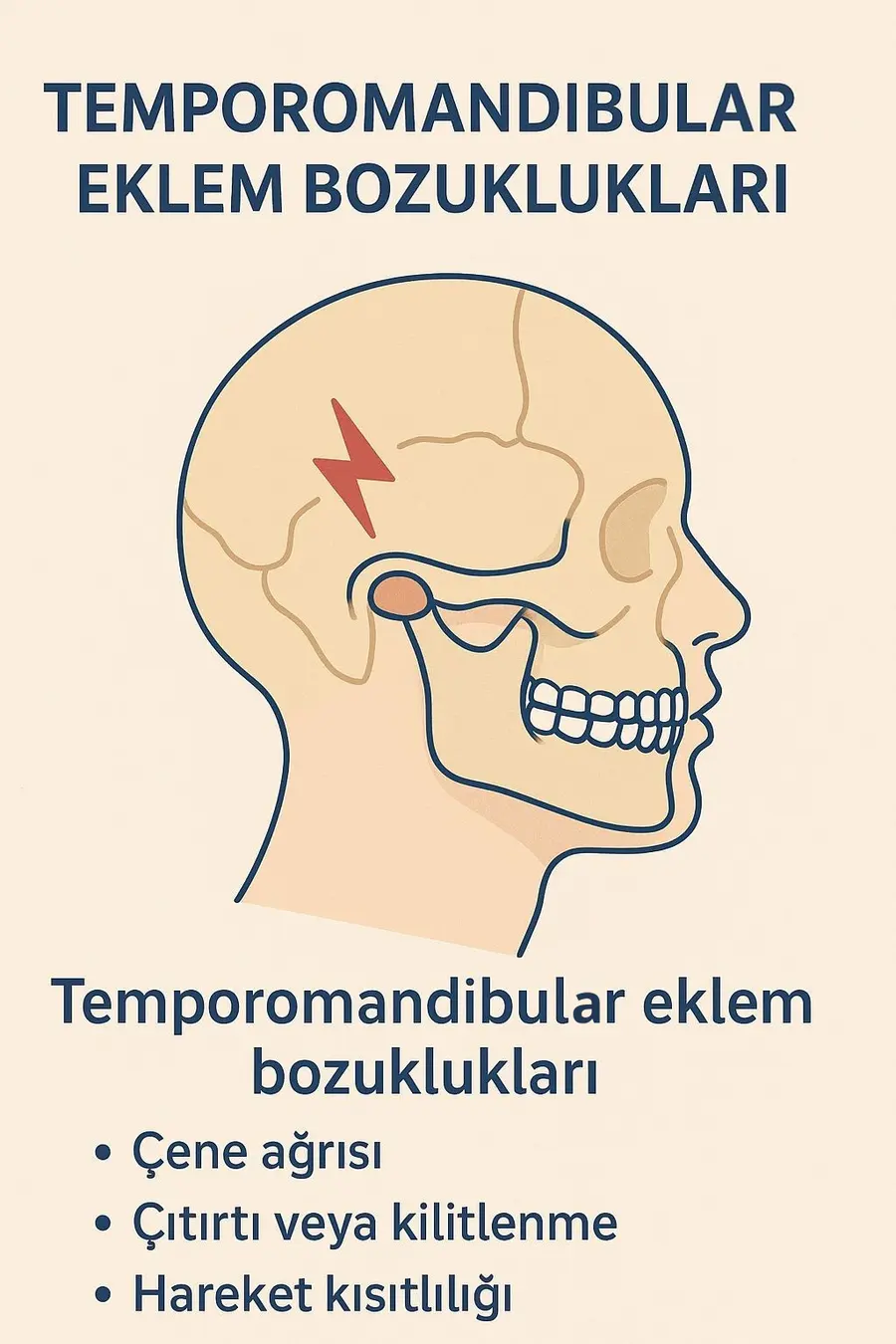
TMJ disorders show up as jaw-joint pain, restricted jaw movement, or clicking and difficulty when chewing, and can come from the muscles as well as the joint. Treatment is planned case by case, from a night guard to surgery where necessary.
Temporomandibular Joint Disorder
These disorders present with jaw-joint pain, restricted jaw movement, and clicking or difficulty while chewing; they can originate in the muscles as well as the joint itself.
TMJ treatment is planned case by case: night guard, medication, physiotherapy and, where necessary, surgical approaches.
Every treatment is planned personally after an examination and imaging. Contact us with your questions or request an appointment with the form below.
Frequently asked questions
What are the signs of a TMJ disorder?
Typical signs are pain in the jaw joint, restricted jaw movement, and clicking or difficulty while chewing. Because several conditions can cause similar complaints, an examination is needed before any conclusion is drawn.
Does the pain come from the joint or from the muscles?
It can be either, or both. TMJ disorders may originate in the chewing muscles as well as in the joint itself, which is why the examination looks at both before a treatment is chosen.
How are TMJ disorders treated?
Treatment is planned case by case. Options include a night guard, medication and physiotherapy, with surgical approaches reserved for the cases where they are necessary.
Who treats TMJ disorders at the clinic?
Temporomandibular joint therapy, both surgical and non-surgical, is part of the work of oral and maxillofacial surgeon Assoc. Prof. Dr. Türker Yücesoy. Consultations are held in Turkish, English and French.
How should I prepare for an appointment?
Note when the pain or clicking occurs and what makes it better or worse, and bring any earlier X-rays or scans you have. The clinical examination and imaging then guide the plan.
Comprehensive Oral & Maxillofacial Surgery Services
Treatment Led by a Specialist Surgeon
Fill in the form — our team will call you back shortly to schedule your consultation.


